Walk your facility’s parking lot this weekend at dusk. Stand in the spot furthest from the building. Look up at your cameras. Can they see you? Or just a grainy silhouette?
Most executives discover their surveillance gaps only after an incident occurs – when the police request footage, and the playback reveals nothing but shadows. In 2026, the margin for error in physical security is non-existent.
Blind spots are not just empty spaces; they are invitations. Sophisticated threat actors – from copper thieves targeting HVAC units to organized gangs casing loading docks – know exactly where your lenses stop seeing. Arann Tech site audits consistently find that 84% of commercial installations contain at least one critical blind spot that could be exploited without detection.
Here are the 5 deadliest camera gaps we find during audits, along with the operational fixes required to close them.
Blind Spot #1: The Parking Lot “Shadow Zone”
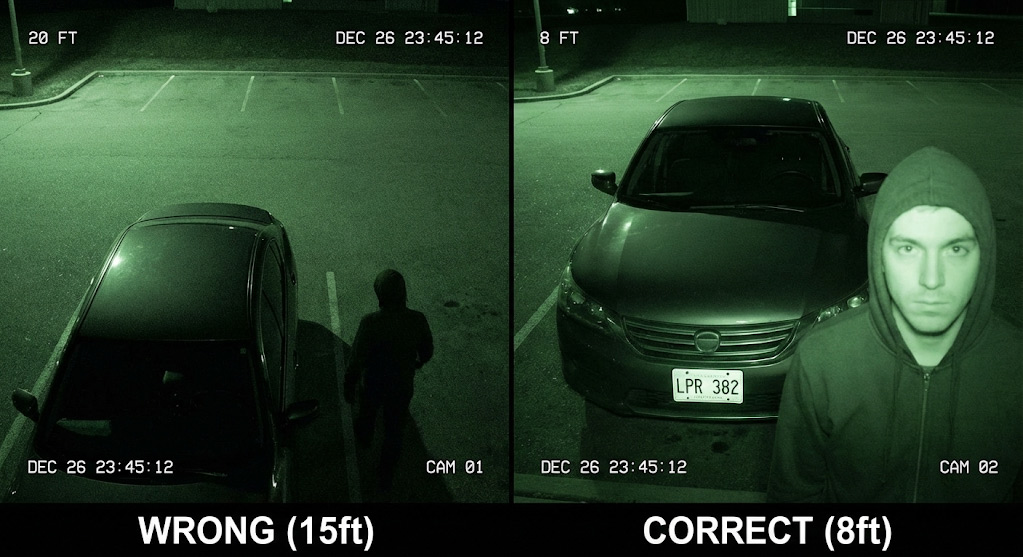
The Problem: Mounting Too High
In an effort to cover as much ground as possible, many facilities mount cameras on light poles at heights of 15 feet or higher. While this provides a bird’s-eye view, it creates a critical “Shadow Zone” near vehicles. At this steep angle, cameras often miss vehicle interiors entirely and fail to capture license plates, which are obscured by the angle or the glare of headlights. Security experts call this the “identification triangle” failure – where the camera cannot capture the eyes, nose, and mouth of a suspect wearing a cap.
The Fix: The “Golden Height” Strategy (With Protection)
We recommend dropping perimeter cameras to a mounting height of 8 to 10 feet using dedicated stanchions. This lowers the angle of incidence, allowing for clear facial recognition and License Plate Recognition (LPR).
Crucially, because this places hardware within reach, these units must be IK10-rated (vandal-proof). Standard cameras at this height are a liability; IK10-rated domes can withstand direct impacts from baseball bats or rocks, ensuring the camera survives the very attack it records.
Arann Tech Approach: Our installers run light meter tests during site surveys to map lux levels at dusk, ensuring IR illuminators are powerful enough to penetrate the darkest corners.
Blind Spot #2: The Loading Dock Dead Angle
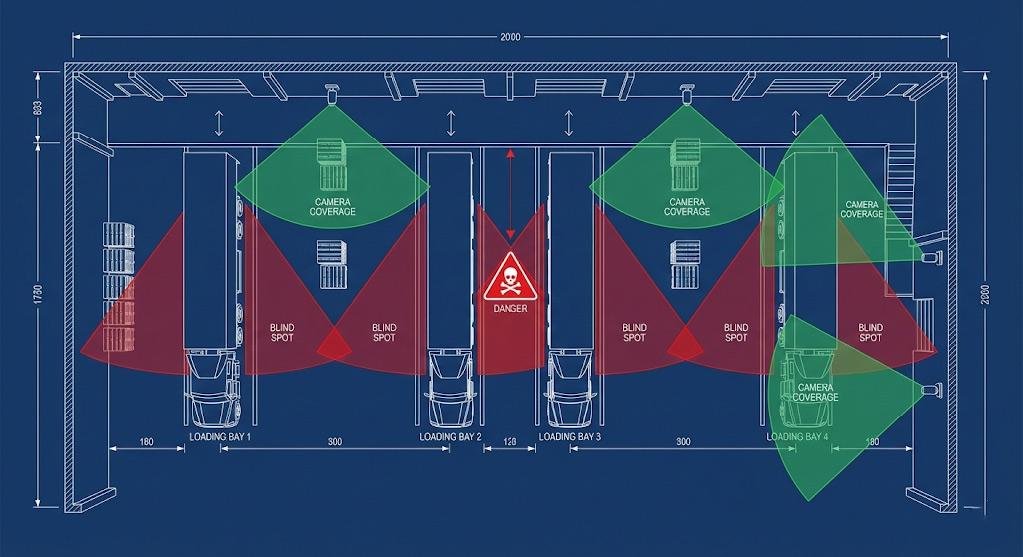
The Problem: Fish-Eye Distortion
Loading docks are dynamic, high-risk environments. To save on hardware costs, businesses often install a single, wide-angle “fisheye” camera to cover a 40-foot dock bay. While these cameras offer a 180-degree view, they suffer from severe pixel distortion at the edges. A thief can stand just three feet from the bay door frame and remain virtually indistinguishable. Furthermore, stacked pallets and parked forklifts frequently block the lower 4 feet of the frame, creating temporary tunnels for unauthorized access.
The Fix: Cross-Fire Positioning
Low-mounted cameras (3ft) are easily damaged by forklifts and pallet jacks. Instead, we implement a “Cross-Fire” strategy:
- Overhead: A high-resolution bullet camera for general activity monitoring.
- Cross-Fire Zone: Two cameras mounted at 7-8 feet on opposite corners of the dock bay, facing inward. This angle allows the cameras to see “under” the fisheye curve and behind obstructions without risking damage from heavy machinery.
Industry Reality: Supply chain shrinkage is a growing concern. According to the 2025 ASIS Security Incident Report, theft at transfer points like loading docks accounts for a significant percentage of inventory loss due to blind spots created by heavy machinery.
Blind Spot #3: The HVAC Blind Corridor
The Problem: Copper Theft Targeting
Following the significant tariff hikes on semi-finished copper imports in mid-2025, domestic copper prices surged, triggering a nationwide spike in theft. Thieves are aggressively targeting commercial HVAC units on rooftops. The blind spot here is the narrow gap between large condenser units. Standard perimeter cameras see the tops of the units but miss the service corridors between them where thieves use battery-operated saws to cut refrigerant lines undetected.
The Fix: Micro-Surveillance
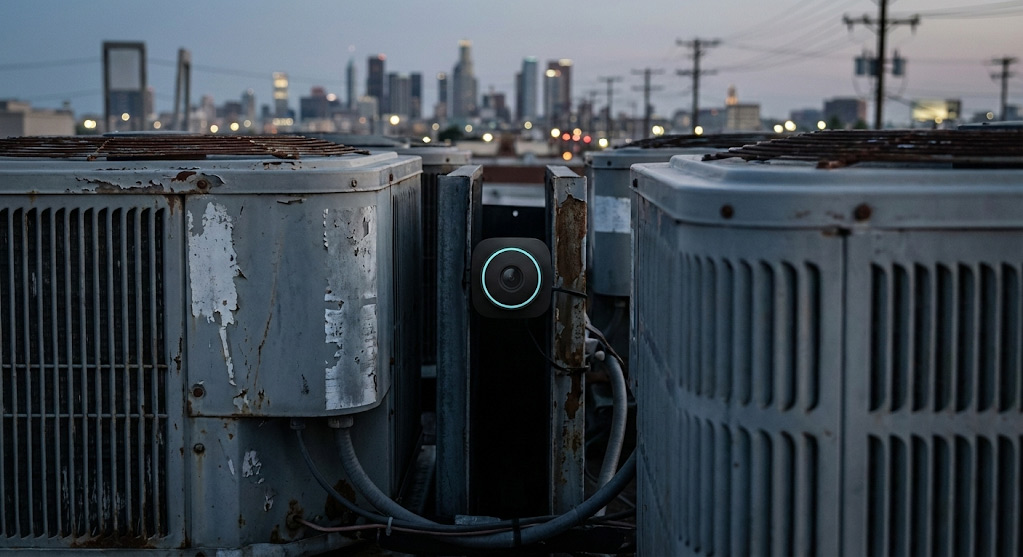
We deploy “Pico-cameras” – compact, 2-inch devices – mounted directly within the service alleys. These are paired with industrial vibration sensors on the HVAC units themselves. If a sensor detects the specific frequency of a saw or tampering, the camera feed is flagged immediately.
Arann Tech Approach: Our managed security service includes specific “tamper alerts” for critical infrastructure, allowing our SOC to verify and intervene before the copper is stripped.
Blind Spot #4: The Employee Entrance “Trust Zone”
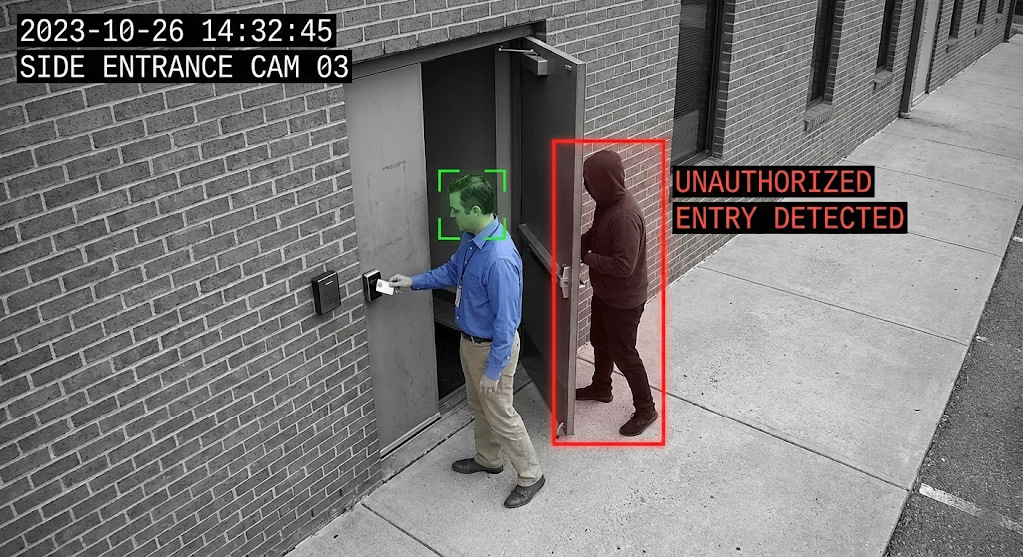
The Problem: The Side Door Fallacy
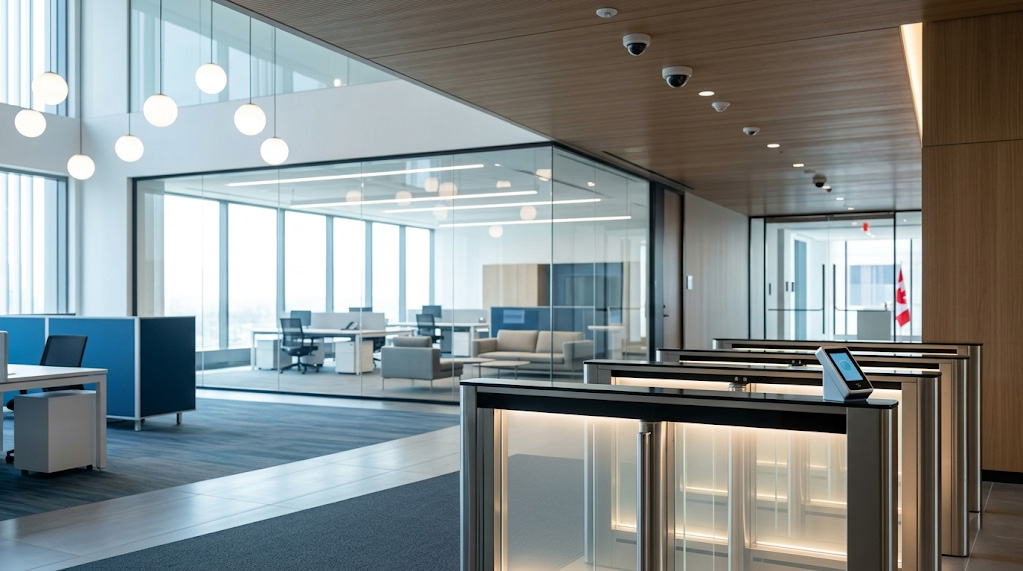
Main entrances are often fortresses of security. However, the side “employee only” door often relies on a single, outdated dome camera. This creates a “Trust Zone” vulnerability. If a camera is positioned to view the door from the inside, it often blinds itself when the door opens, creating a 15-foot blind wedge behind the entering person. This is the prime vector for “tailgating” – where an unauthorized person slips in behind an employee.
The Fix: Door-by-Door Coverage
We install cameras that view the exterior of the door and integrate them with the access control system. The camera must capture the face of the person swiping the badge and the person walking in behind them.
Arann Tech ensures all AI-integrated access systems are fully compliant with local privacy and biometric data laws (such as GDPR or BIPA), protecting your business from legal exposure while securing the door.
The Risk: According to the 2025 Verizon Data Breach Investigations Report (DBIR), the human element involves 60% of breaches. Tailgating is a physical manifestation of this risk, bypassing digital firewalls simply by holding a door open.
Blind Spot #5: The Digital Blind Spot
The Problem: “Set It and Forget It”
This is the most dangerous blind spot because it is invisible. It is the gap between recording footage and reviewing it. Many businesses record terabytes of footage that sits on a local DVR, overwriting itself every 30 to 90 days. If a theft occurs on day 91, the evidence is gone. Furthermore, if no one is watching the feed, the camera is merely documenting your loss, not preventing it.

The Fix: Active AI Analytics
We move away from passive recording to active alerting using AI motion analytics. Systems are configured to flag “unusual behavior” (e.g., loitering by the back gate at 3 AM) rather than just simple motion. Critical clips are automatically uploaded to the cloud, ensuring evidence is preserved even if the local recorder is damaged.
Arann Tech Approach: Our managed service reviews 100% of AI-flagged events within 15 minutes. We don’t just store footage; we act on it.
The 3-Minute Blind Spot Test Every Executive Should Run
Is your facility exposed? Take this quick physical audit to find out.
- The License Plate Test: Park in every spot in your lot. Review the footage. Can you read your own plate clearly?
- The Perimeter Walk: Walk along the base of every exterior wall. Do you disappear from view at any point? Thieves often hug walls to avoid wide-angle lenses.
- The Dusk Check: Check your camera feeds at twilight. Is the image grainy or washed out? Commercial-grade IR should provide clear night vision up to 100ft.
- The Delivery Audit: Pull footage from a delivery that happened 30 days ago. Is the file corrupted or overwritten?
- The Remote Access Check: Turn off your Wi-Fi and try to view your cameras via 5G/4G from two blocks away. Is the latency under 5 seconds?
Fail any part of this test? Don’t wait for a breach to prove you right. Eliminate blind spots before they cost you.
Fail any part of this test?
Don’t wait for a breach to prove you right. Eliminate blind spots before they cost you.
Comparison: Consumer vs. Commercial Security
| Feature | Consumer Grade (Costco/Amazon) | Commercial Grade (Arann Tech) |
| Night Vision Range | 30ft (Grainy / Limited) | 100ft+ (Clear IR Illuminators) |
| Blind Spot Risk | High (Fixed Lens) | Low (Varifocal / Wide Dynamic Range) |
| Retention | SD Card / Limited Cloud | 30-90 Days Redundant Storage |
Frequently Asked Questions
What causes the most common security camera blind spots?
The most common causes are improper mounting height (mounting too high creates shadow zones), incorrect lens selection (wide angles cause distortion at edges), and poor lighting conditions that render consumer-grade night vision ineffective.
How high should security cameras be mounted?
For optimal facial recognition and license plate capture, the “Golden Height” is typically between 8 and 10 feet. Mounting cameras higher (e.g., 15ft+) often results in top-of-head views that are useless for identification.
What are the 5 most common security camera blind spots?
The 5 most common blind spots are: 1) The Parking Lot Shadow Zone, 2) The Loading Dock Dead Angle, 3) The HVAC Service Corridor, 4) The Employee Entrance “Trust Zone”, and 5) The Digital Blind Spot (unmonitored footage).
What’s the ROI on professional security camera installation?
Beyond theft prevention, the ROI is often realized through insurance premiums. Organizations with professionally monitored security systems can see insurance discounts averaging 5-20% in the first year.
Blind spots don’t announce themselves with a warning sign. But thieves notice them immediately. In an era where physical and digital threats are converging, leaving your perimeter unmonitored is a risk no COO can afford to take.
Blind spots don’t fix themselves. Schedule your camera audit before the thieves schedule their visit.
Disclaimer: The content provided in this article is for informational purposes only and does not constitute legal or professional security advice. Arann Tech recommends a professional on-site assessment to identify specific security risks relevant to your facility. Security statistics and data are based on available industry reports from 2025-2026.