Key Takeaways
- The Compliance Gap: Consumer email services like Gmail or Yahoo lack the enforced security controls required by PHIPA and PIPEDA.
- Encryption is the Standard: Canadian privacy commissioners expect Personal Health Information (PHI) to be encrypted both in transit and at rest.
- Jurisdictional Risk: Storing data on U.S. servers exposes Canadian clinics to the U.S. CLOUD Act, making local data residency a critical best practice.
- The Solution: Transitioning to a healthcare-specific provider ensures your clinic has a signed Information Manager Agreement (IMA) and audit-ready logs.
The Reality of “Free” Email in a Regulated Industry
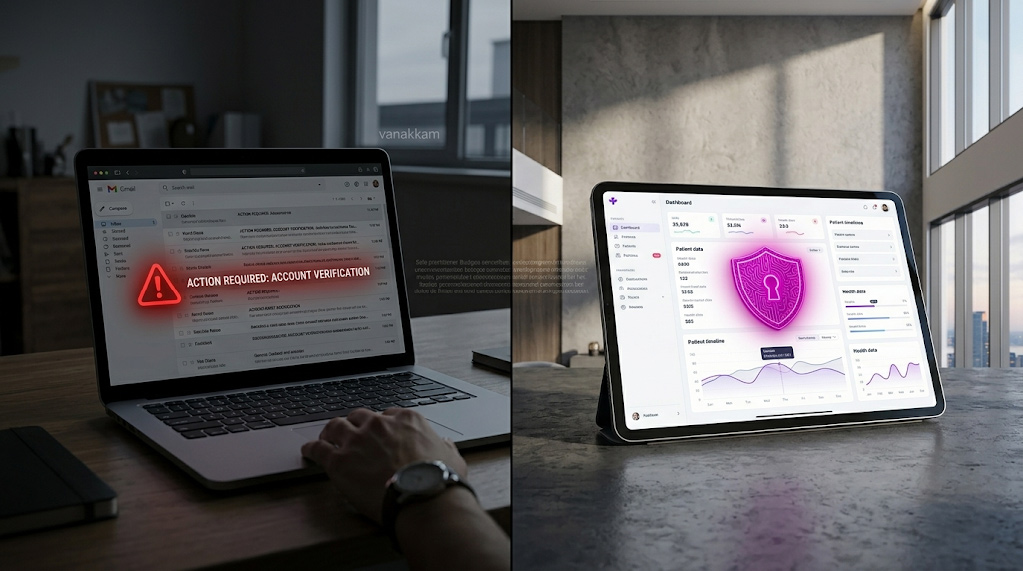
Many clinic administrators believe that because they use a strong password, their standard Gmail or Outlook account is secure enough for patient communication. However, in the eyes of the Information and Privacy Commissioner of Ontario (IPC), there is a vast difference between “secure” and “compliant.”
What is PHIPA compliance?
In Ontario, the Personal Health Information Protection Act (PHIPA) requires health information custodians to take “reasonable steps” to protect PHI against theft, loss, and unauthorized use or disclosure. The IPC has explicitly stated that it expects PHI emailed between custodians or to patients to be secured with encryption.
Free email accounts typically use standard TLS encryption to protect the message while it travels through the “pipes” of the internet. However, once that email arrives at the provider’s server, it often sits in a state where the provider (like Google or Microsoft) holds the decryption keys. This fails the “zero-access” requirement that many modern healthcare auditors look for.
Five Critical Gaps in Consumer Email
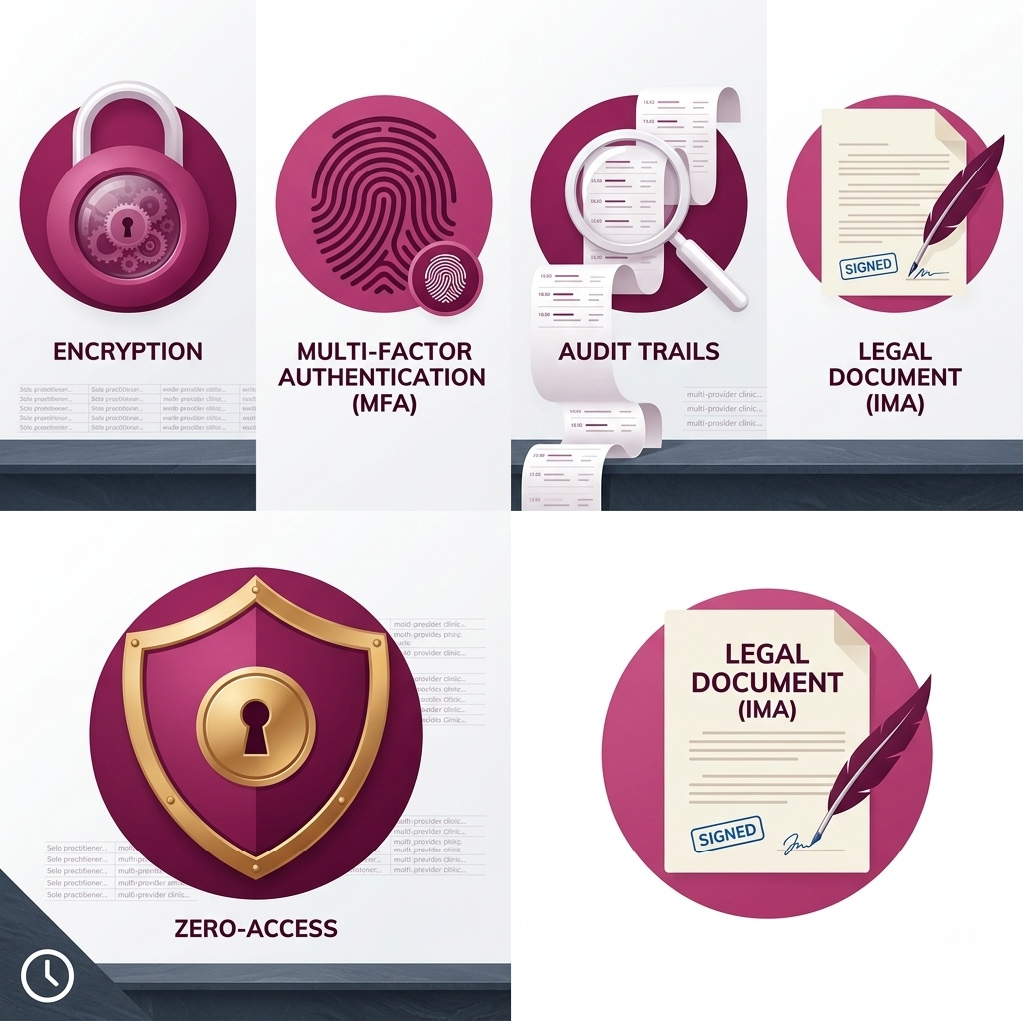
If your clinic is still using a @gmail.com or @yahoo.ca address, you are likely missing these four essential technical safeguards:
1. Zero-Access Storing
Compliance requires that your email provider cannot read your stored messages. Most free providers retain the ability to access data on their servers for troubleshooting or automated processing. Professional healthcare email uses “zero-access” storage, meaning only the clinic holds the keys to decrypt the data.
2. Enforced Multi-Factor Authentication (MFA)
While many free services offer MFA as an option, they cannot enforce it across your entire staff. A single employee who neglects to turn on MFA creates a backdoor into your clinic’s entire communication history.
3. Detailed Audit Trails
PHIPA mandates that clinics monitor who has accessed PHI. Consumer accounts do not provide the granular logs required to prove that an unauthorized person did not view a specific file or message.
4. Information Manager Agreements (IMA)
Under Canadian law, a third party that handles PHI on your behalf is considered an “Information Manager.” You are required to have a signed agreement (an IMA or BAA) with that provider. Free email services do not provide these legal protections for consumer-tier users.
Data Residency vs. Jurisdictional Risk

There is often a debate about whether PHI must stay in Canada. It is important to clarify that PHIPA does not explicitly prohibit storing data outside of Canada. Instead, the law requires that you maintain equivalent protection standards regardless of where the data lives.
However, the best practice is to keep data residency local. When you store data on U.S. servers, you fall under the jurisdiction of the U.S. CLOUD Act. This law allows U.S. authorities to compel providers to grant access to data even if it belongs to a Canadian citizen. This creates a jurisdictional risk that can be avoided by choosing providers with Canadian data residency or by utilizing robust client-side encryption.
A Hierarchy of Compliant Alternatives
If you are ready to move away from free email, you should consider these three categories of professional tools.
Option 1: Canadian Healthcare Specialists
Providers like Hushmail for Healthcare are specifically built for the Canadian market. They are based in Vancouver, provide signed IMAs that comply with provincial laws, and offer a mix of zero-access storage and secure portal delivery for recipients.
Option 2: Secure Messaging Portals
Platforms such as Brightsquid operate differently than traditional email. They function as a secure portal where patients must log in to view messages. This ensures that the data never actually “leaves” a secure environment, which is an excellent way to handle highly sensitive lab results or specialist referrals.
Option 3: Configured Enterprise Platforms
You can use Google Workspace or Microsoft 365, but only if you move to a paid business tier and apply specific configurations:
- Microsoft 365: You must explicitly configure your tenant for Canadian data residency and ensure you have a signed Business Associate Agreement.
- Google Workspace: For those who prefer the Google ecosystem, the Enterprise Plus tier offers Client-Side Encryption (CSE). This ensures that Google cannot decrypt your stored data, though it is more complex to set up than purpose-built healthcare tools.
How to Handle a Transition
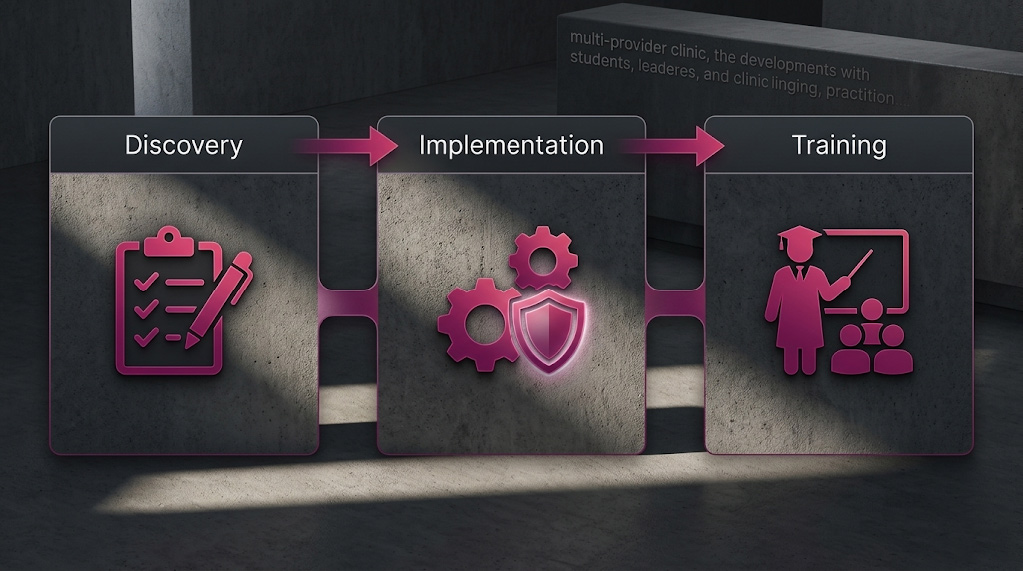
Moving your clinic to a secure provider does not have to be a technical nightmare. At Arann Tech, we help clinics navigate this transition by:
- Auditing Current Workflows: We identify where PHI is currently being leaked through unencrypted channels.
- Setting Up Secure Infrastructure: We help you choose and configure a provider that meets your specific provincial requirements.
- Staff Training: We ensure every member of your team understands how to use secure portals and encrypted “send” features.
Frequently Asked Questions
- What happens if my clinic has a breach while using free email?
You are legally required to notify the Information and Privacy Commissioner (IPC) in Ontario or your relevant provincial commissioner. Using a non-compliant, unencrypted service during a breach is often viewed as a failure to provide “reasonable safeguards,” which can lead to higher fines and significant reputational damage.
- Does “substantially similar” mean we follow PIPEDA or PHIPA?
In Ontario, PHI is governed by PHIPA, which is considered “substantially similar” to the federal PIPEDA. For private-sector clinics, this means you primarily follow provincial rules, but the federal standards still inform the overall expectations for data security.
- Can patients still email me normally?
Yes, but you must reply securely. Most compliant services allow you to send a “secure link” to the patient. This allows the patient to read your message and reply back within an encrypted environment without them needing to set up a complex account.
Conclusion
The “free” price tag of a consumer email account is a significant liability for any Canadian medical practice. While the law is flexible regarding where data is stored, it is rigid regarding how it is protected. Prioritizing encrypted storage and following the best practice of local data residency is the only way to protect your patients and your professional license.
If you are still using a @gmail.com or @outlook.com address for your clinic, it is time to make the switch.
Book a Free Assessment with Arann Tech to secure your business’s communications today.
Disclaimer: This article is for informational purposes and does not constitute legal advice. For specific compliance questions, consult a privacy lawyer or your provincial regulatory college.