

What it is, why it matters, and how it’s done: a guide for business leaders and IT teams
For Business Leaders
Your security system logs thousands of events every day. Without a reference point for what “normal” looks like on your network, those alerts are meaningless noise. A network security baseline assessment creates that foundation. It identifies exactly what is supposed to be on your network, its intended function, and its typical data throughput. Everything your security tools do after this depends on having this reference point in place.
For IT Teams
A baseline formalizes your intuitive understanding of the environment and bridges documentation gaps. It produces the documented, defensible record that compliance audits require and incident response depends on. Leading standards, including NIST 800-53 (CM-2) and CIS Controls v8, identify baseline configuration as a foundational control. Before you can protect a network, you must define it.
What Is a Network Security Baseline Assessment?
In plain English: it is a formal audit of your network’s authorized state. It is not an audit looking for what is broken; it is an audit establishing what is permitted. It answers four core questions:
- What devices are permitted to connect?
- What types of communication are permitted?
- What does normal traffic volume look like?
- Do all devices meet current security standards?
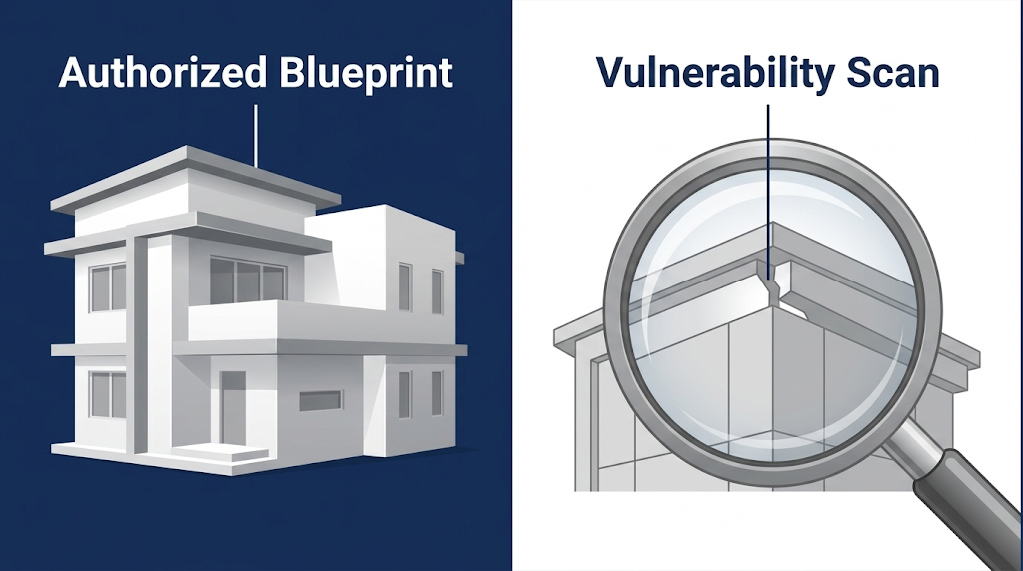
Baseline vs. Vulnerability Scan: A vulnerability scan identifies “holes” in your current setup. A baseline assessment defines the “blueprint.” You cannot accurately scan for vulnerabilities without first knowing which assets and configurations are authorized.
“You cannot detect what deviates from normal until you have documented what normal looks like.”
The 7-Step Assessment Process
A baseline capture should typically run for 7 to 14 days to cover a full working week plus off-hour maintenance and backup cycles.

Step 1: Define Assessment Scope
Agree on which parts of your network are being assessed: office LANs, cloud VPCs (Virtual Private Clouds), and remote VPN connections. NIST 800-53 (PL-2) requires this formal boundary definition before technical work begins.
Step 2: Gather Documentation
Collect your starting assumptions: network diagrams, IPAM records (IP Address Management logs), and firewall rulesets. Missing documentation at this stage is a common finding and serves as the first “gap” to be remediated.
Step 3: Asset Discovery
Find every active device on your network. Every device discovered that lacks a corresponding record in your documentation is flagged for investigation.
- Technical Detail: Use Nmap to scan IP ranges. Cross-reference results against Active Directory; any device on the network but absent from AD is a “Shadow IT” candidate.
Step 4: Protocol Baseline
Map existing communication paths. This identifies insecure or unnecessary protocols like Telnet, FTP, or SMBv1 (the protocol exploited by WannaCry).
- Technical Detail: Perform a packet capture on SPAN ports (mirror ports) and analyze with Wireshark.
Step 5: Traffic Volume Baseline
Document data throughput to produce the metrics your security monitoring tools use to detect anomalies.
- Technical Detail: Use NetFlow to map peak usage hours. If your accounting server typically sends 50MB daily and suddenly sends 5GB, the baseline makes this spike visible.
Step 6: User and Device Enumeration
Every active device must be traced to a named owner and business purpose. This step closes the gaps that automated discovery (Step 3) cannot fill, such as identifying the manufacturer of a device via its MAC address.
Step 7: Configuration Audit
Confirm that devices meet security standards (e.g., WPA3 for wireless, current VPN ciphers). Review firewall rules; any rule not triggered in 12+ months should be disabled to reduce the attack surface.
Deliverables: What the Assessment Produces

This process results in five usable records for business reviews and insurance renewals:
| Deliverable | Business Value |
| Authorized Device Inventory | A verified list of every permitted device and its owner. |
| Port & Protocol Matrix | Evidence of control for audits; defines allowed communication. |
| Traffic Volume Profiles | The “metrics for normal” that trigger automated alerts. |
| Hardening Report | A prioritized list of equipment requiring security updates. |
| Remediation Plan | A plain-English roadmap of which security gaps to close first. |
Turning Your Baseline into Automated Monitoring
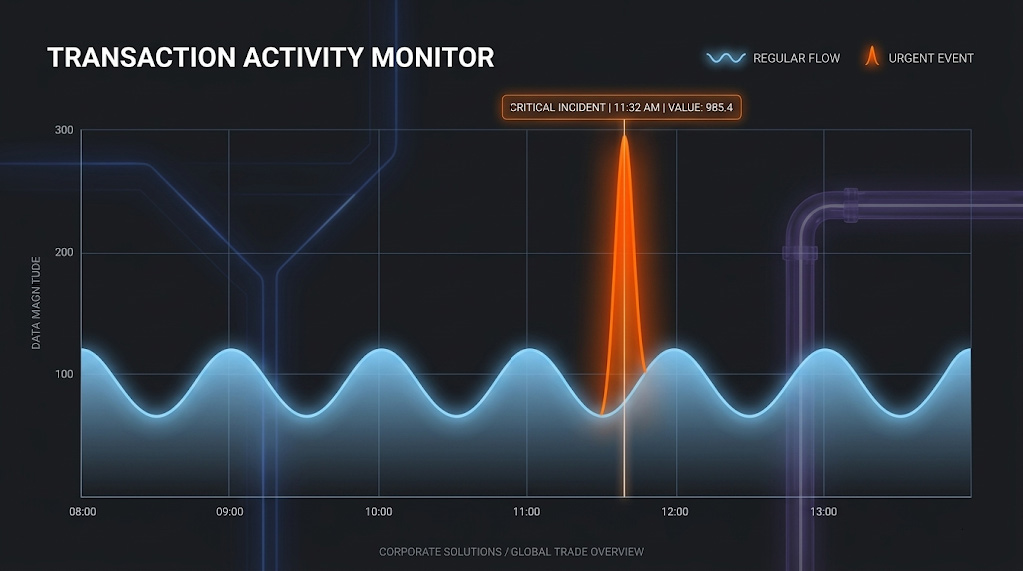
Documentation is the start; automation is the goal. Once your baseline is complete, integrate it into your SIEM (Security Information and Event Management) system to trigger three core alert types:
- New Port Activity: Alerts the moment an unapproved service starts.
- Traffic Spikes: Provides early warning of data exfiltration.
- Lateral Movement: Alerts if two devices with no documented relationship begin exchanging traffic.
How Arann Tech Delivers This
Arann Tech conducts network security baseline assessments as the foundation of our managed security services. We don’t assume your documentation is perfect; we build it from scratch where it’s missing.
Before you invest in new security tools, you need to know what you are protecting. Arann Tech provides a documented, defensible record of your network’s authorized state, usable immediately for compliance, insurance, and long-term security strategy.
Revised FAQ (SEO & AI Optimized)
- What is a network security baseline assessment?
It is a formal process documenting the authorized state of a network, including permitted devices, communication types, and traffic volumes. It serves as the reference point for NIST 800-53 and CIS Controls.
- How is this different from a vulnerability scan?
A scan looks for holes; a baseline defines the house. You must know which assets are authorized (Baseline) before you can effectively search for their weaknesses (Vulnerability Scan).
- Will it disrupt our operations?
No. The traffic monitoring and scanning phases are passive. We observe network behavior without making changes to your live environment.
- How often should we reassess?
Establish a baseline during your first formal security review. Update it when significant infrastructure changes occur, and formally re-validate annually to catch “configuration drift.”
Disclaimer
This article is for general informational and educational purposes only. It does not constitute legal, regulatory, or professional security advice. Framework references are cited for context only. Every organisation’s network environment is different. Consult a qualified cybersecurity professional before implementing changes. Arann Tech accepts no liability for actions taken in reliance on this article.