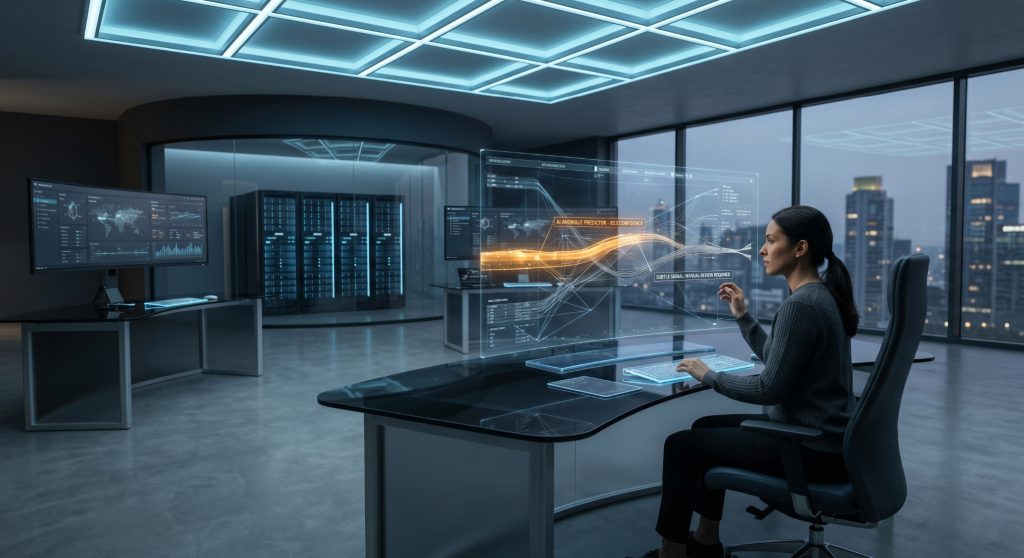
Three years ago, the conversation in every boardroom was the same. We were told that Artificial Intelligence would fundamentally transform Security Operations Centers. The promise was simple: AI would monitor networks around the clock and eventually replace the need for human teams. We all believed the hype.
By 2026, the reality has shifted. Many leaders who invested heavily in “AI-only” security are frustrated. They bought expensive modules and turned on automated security operations, but their analysts are still drowning in data. Worse, quiet and sophisticated breaches are still slipping through the cracks.
If you are asking, “Will SOC analysts be replaced by AI?” The answer from the front lines of 2026 is a resounding no. The technology has arrived, but the relief has not. Tools didn’t replace the analysts; they simply changed the nature of the work.
What AI Actually Does Well in 2026
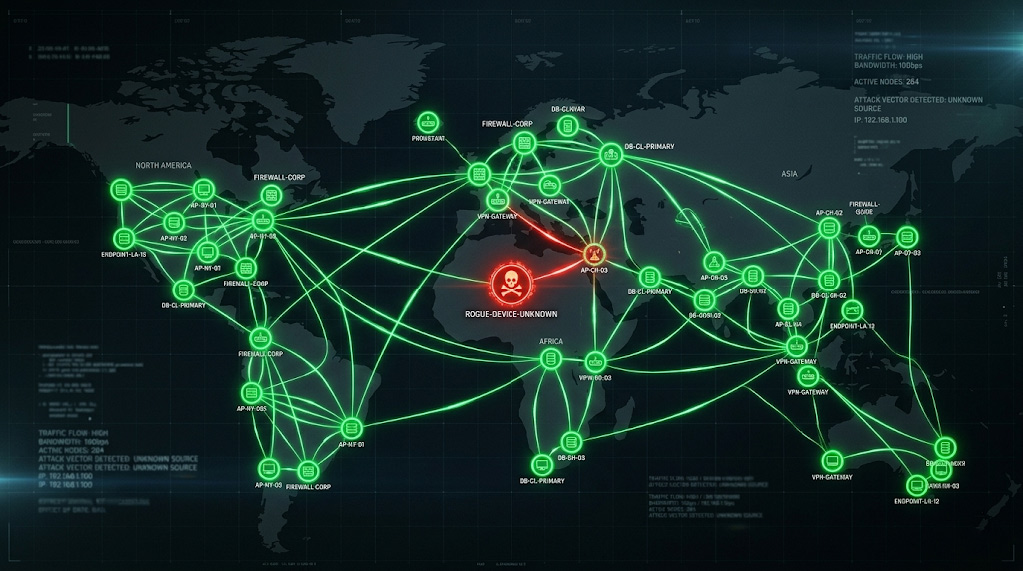
AI threat detection in 2026 is exceptional at managing the mundane. It is a tireless machine that solves a problem no human can: processing every piece of data flowing across a network in real time.

Current industry evaluations show that AI genuinely outperforms humans in these specific areas:
- Matching Known Threats: If an attack has happened before, AI will catch it instantly.
- Organizing Data: Organizations generate massive amounts of security logs daily. AI can sort and index this data in milliseconds.
- Flagging Basic Anomalies: Automated security operations use behavior analytics to learn what “normal” looks like. If a user logs in at 3:00 AM from an unfamiliar country, the AI flags it immediately.
- Initial Filtering: AI acts as a high-speed sieve, discarding thousands of low-priority notifications so they never reach a human desk.
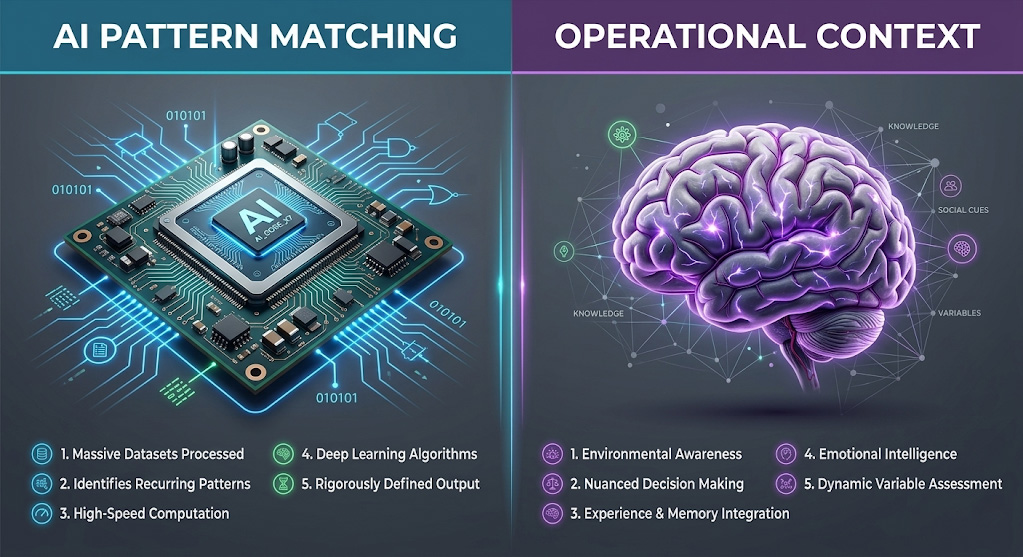
However, there is a catch. AI excels at yesterday’s threats. Against a completely new technique or a “quiet” move by a skilled attacker, the machine often fails to see the big picture.
Why AI Cannot Stand Alone: 5 Critical Gaps
The answer to “Can AI replace a SOC” is not because of five significant limitations where human-led threat hunting remains essential.
| The Gap | What the AI Sees | What the Human Knows |
| 1. Business Context | The CEO logged in from Hawaii. This triggers a high-severity alert. | The CEO is on a planned sales retreat. The human closes the alert. |
| 2. False Alarms | A new internal software update looks like malware. AI blocks it. | A human calls the dev team and confirms the update is legitimate. |
| 3. New Attack Styles | An attacker uses standard Windows commands. No alert is raised. | A human recognizes “Living off the Land,” where attackers use your own tools against you. |
| 4. Identifying Intent | Outbound email traffic increased by 15 percent. | A human connects this to a targeted social engineering campaign. |
| 5. Legal Decisions | AI blocks a connection and saves a data log. | A human determines if the incident must be reported to the government. |
The Regulatory Landscape: Determination AI Cannot Make

In 2026, the consequences of a security breach are legal as much as they are technical. A human must determine if a breach triggers a mandatory notification. No automated system can perform a legal SEC materiality determination or coordinate a CIRCIA final rule filing.
- SEC Rules: Public companies have four business days to report a “material” incident. A human must justify why and when that determination was made.
- CIRCIA Final Rule: As of May 2026, this rule is fully active. Critical infrastructure sectors must report significant incidents to the government within 72 hours.
- Privacy Laws: Determining if a leaked file contains “personal data” or just useless code requires a nuanced understanding that AI still struggles to define legally.
Understanding the Noise: What is Alert Fatigue in Cybersecurity?
What is alert fatigue in cybersecurity? It is the point where a security team becomes desensitized to alarms because the vast majority are false positives.
AI doesn’t know that your finance team is staying late to run quarter-end reports. It only knows that the activity is “unusual.” In a healthy business, unusual things happen every day. Without human-led threat hunting, your team will eventually ignore the one unusual event that actually matters.
“AI identifies events. Humans identify intent. You cannot automate intent.”
Real-World Failures of “AI-Only” Security
- The Accidental Lockout: An AI module flagged a CEO’s email for “impossible travel” and executed a hard lockout during a critical merger negotiation. A human would have verified the travel in minutes, but the AI caused a six-hour business disruption.
- The Silent Breach: Attackers used stolen credentials to move through a network. Because they used “authorized” passwords, the AI saw nothing wrong. This is where social engineering in cybersecurity bypasses the best algorithms.
The 2026 SOC Truth: The Hybrid Model
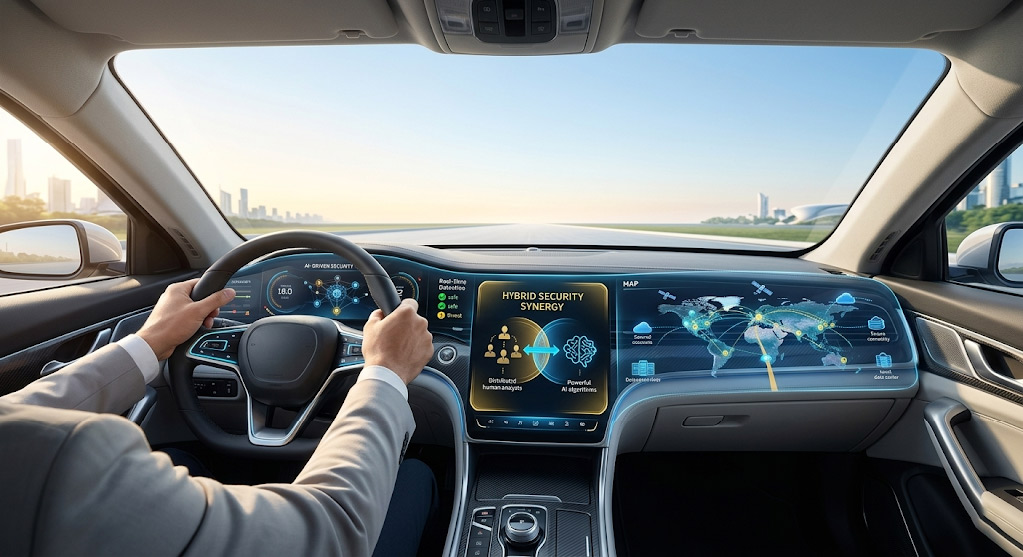
The future is not a choice between humans or machines. It is a hybrid model where AI is the engine and the analyst is the driver.
- Let AI Read Everything: Process data at a scale that humans cannot touch.
- Automate the Obvious: Let AI handle routine, low-risk tasks to reduce alert fatigue.
- Empower Human Hunting: Shift your team from reacting to alerts to proactively searching for stealthy actors.
- Humans Own the Crisis: When a breach is confirmed, a person must decide what to shut down to protect the business.
Stop paying for alerts. Start paying for outcomes.
At Arann Tech, we use AI as a high-powered filter, not a final decision-maker. We reduce the noise so our experts can focus on the signals that actually matter to your business.
Contact Arann Tech today to audit your network and see what your automated systems may be missing.
Frequently Asked Questions
1. Can AI fully automate cybersecurity? No. AI struggles with “living off the land” attacks and social engineering in cybersecurity. These are methods where hackers use legitimate credentials or manipulate people rather than using malicious code.
2. What are the main limitations of AI in 2026? AI lacks business context, creates high levels of alert fatigue, and cannot perform the legal reasoning required for SEC or CIRCIA reporting.
3. Do companies still need human security analysts? Yes. Human judgment remains the most critical factor in resolving high-impact incidents and meeting strict regulatory deadlines.
4. How does AI help with the CIRCIA final rule? AI provides the logging and real-time detection needed to see that an event happened. However, a human is required to evaluate the event and report it to the government within the 72-hour window.
5. Is human-led threat hunting still necessary? Absolutely. Proactive hunting finds the subtle traces of attackers that automated systems miss, especially when attackers are using stolen but authorized identities.
DISCLAIMER This article is for general informational purposes only and does not constitute legal, regulatory, or professional security advice. Statistics and framework references are cited for context and should be read alongside official source documentation. All case studies are anonymised and illustrative. Every organisation’s security environment is different. Consult a qualified cybersecurity professional before making strategic decisions based on this content. Arann Tech accepts no liability for actions taken in reliance on this article.